
Conclusion: Why Docker Is a Must for Modern Software Development
Docker has established itself as an indispensable tool in software development and has fundamentally changed how developers build, test, and deploy their applications. The benefits range from consistent, portable development environments to a drastic reduction in dependency problems and sources of error. Docker offers a modern, efficient answer to many of the traditional challenges of software development.
Why Docker Matters So Much to Developers
Through containerization, Docker enables a flexible and reliable way of working. Running an application in an isolated, lightweight environment saves resources and provides the portability developers need today. Above all, the consistent environment Docker provides ensures that applications behave the same regardless of operating system or server environment, a decisive advantage that significantly reduces errors and outages.
Docker at the Heart of DevOps and CI/CD
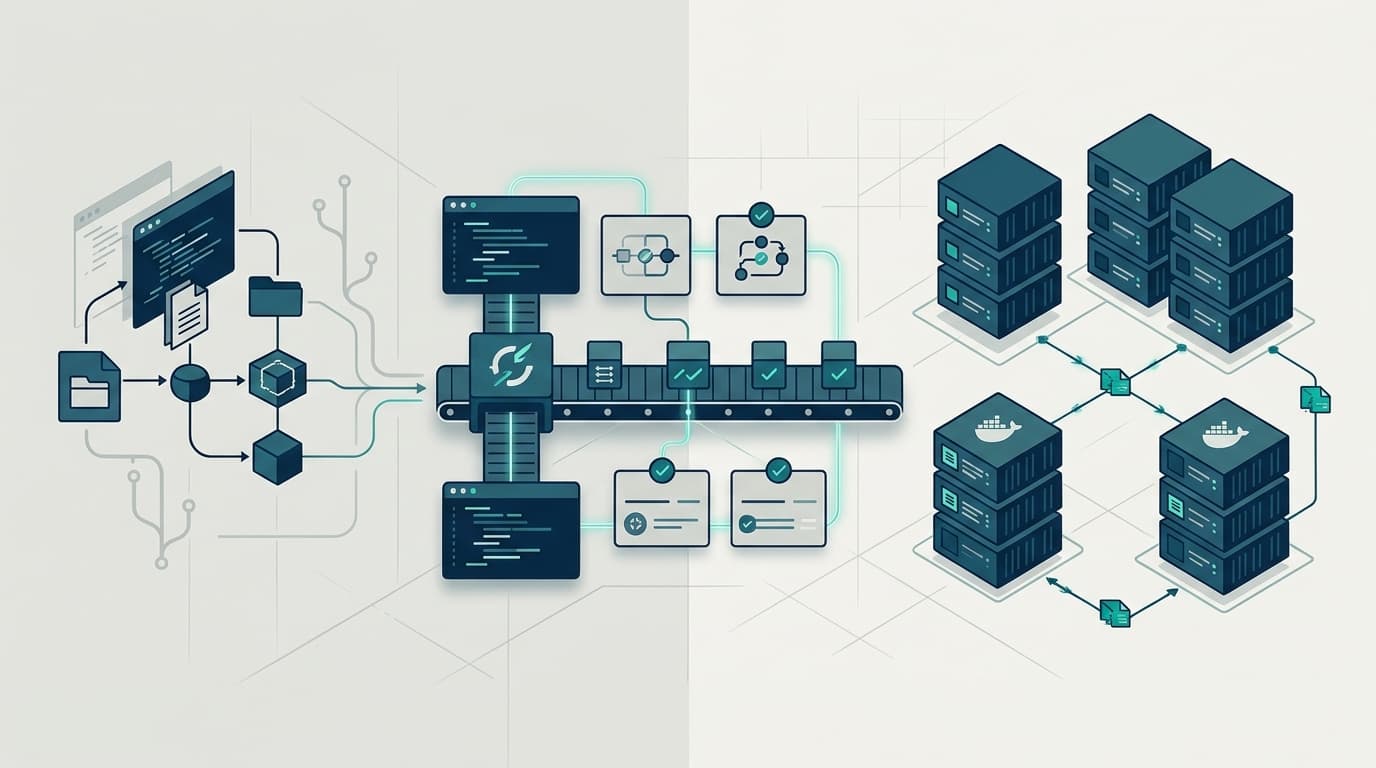
Docker paved the way for DevOps and continuous integration/continuous deployment (CI/CD). By integrating seamlessly into CI/CD pipelines, Docker simplifies the automation of tests and deployments. Developers and IT teams can be confident that code developed locally makes it all the way to production without friction. That makes Docker a key component of a modern DevOps strategy and makes it easier to ship new features quickly and reliably.
The Future of Software Development with Docker
The continuous evolution of Docker and its orchestration tools such as Kubernetes suggests that containerization will keep playing a central role in software development. Companies around the world rely on Docker to build flexible, scalable, cloud-native applications. Its integration with modern cloud providers and its fit with microservices architectures show that Docker is not a passing trend but a central building block of what comes next.
Summary: Why Docker Is a Must
- Consistent environments: Docker eliminates the traditional problems of divergent environments and ensures uniformity between development and production.
- Efficiency and low resource usage: Containerization with Docker is lightweight and resource-efficient, which maximizes efficiency in development and operations.
- Scalability: With Docker and tools such as Kubernetes, applications can be scaled and distributed easily, which forms the foundation of modern, scalable architectures.
- Integration into CI/CD pipelines: Docker is ideal for DevOps teams that use automated pipelines to guarantee stable, fast releases.
All in all, modern software development is hard to imagine without Docker. It helps developers and companies deliver projects faster and more efficiently while maintaining high quality and reliability. For teams and companies operating in a fast-moving digital environment, Docker is an absolute must.